
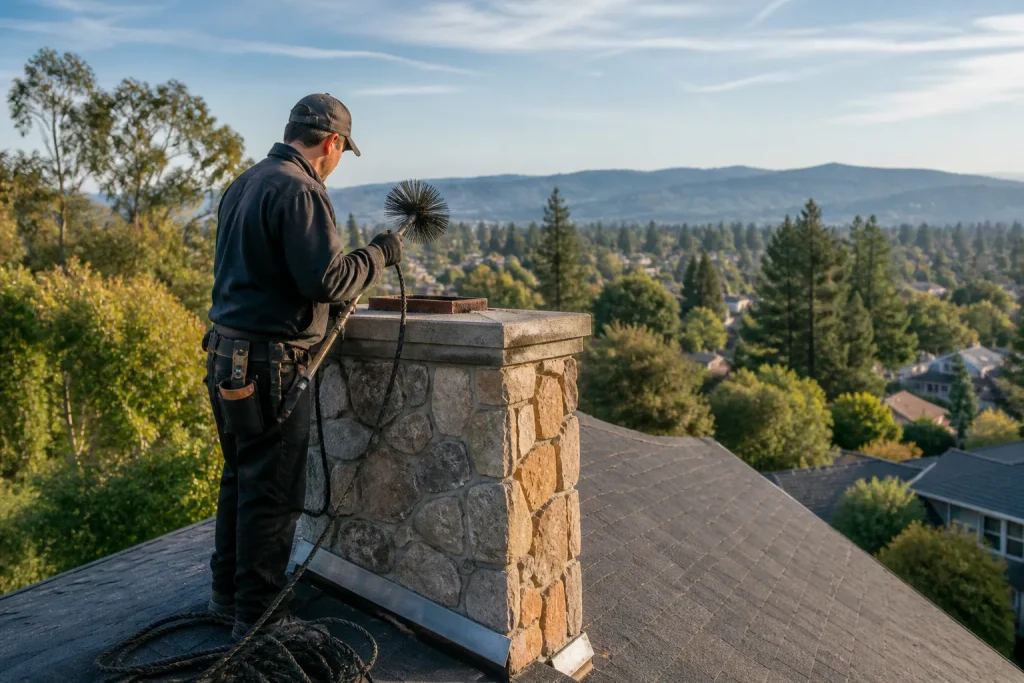
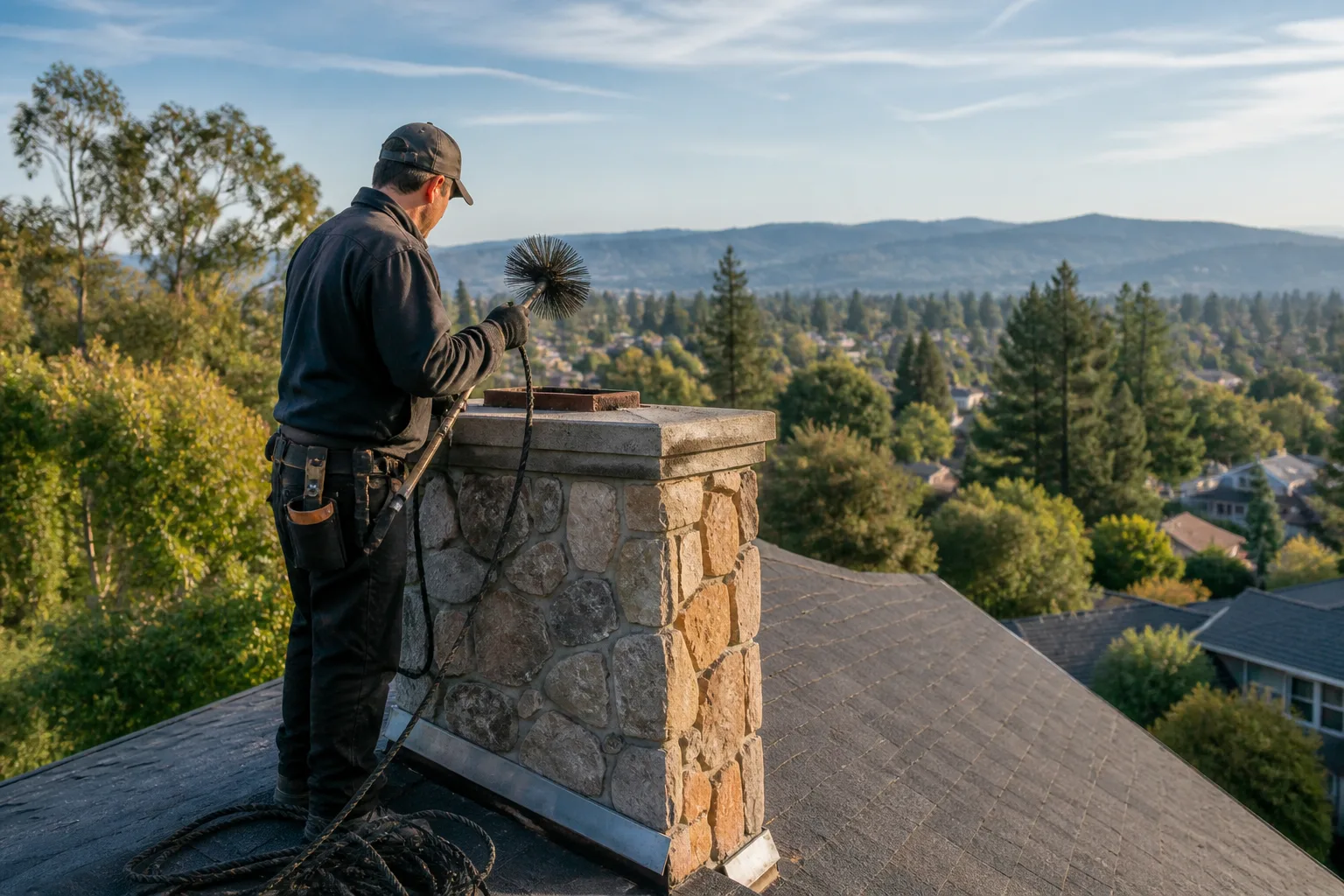
How to Choose the Right Chimney Cleaning Company in Santa Rosa
Choosing a chimney company in Santa Rosa comes down to five checks: current CSIA certification, NFI certification for anyone touching an insert, liability insurance written specifically for chimney work, a documented inspection report tied to NFPA 211, and named professional-grade materials when a repair is proposed. Ask for all five before you book. If a company can’t answer them plainly, keep looking. If you’d rather skip the vetting and talk to a specialist now, call (888) 919-0637.
Here’s the part most homeowners miss. Certification is the floor, not the ceiling. Plenty of technicians hold a valid certificate and still have almost no hands-on time with the prefabricated fireplaces that fill Santa Rosa’s post-1980 neighborhoods. Those units clean differently, inspect differently, and repair differently than an older masonry chimney. A credential earns a technician the right to be considered. It doesn’t prove they’ve worked on your fireplace.
We inspect it, clean it, and fix it as one company with one standard of work. That’s the model this guide is written from, and it shapes every question below.
What credentials actually matter when you hire a chimney company in Santa Rosa?
The three credentials worth verifying are CSIA certification for the sweep or inspector, NFI certification for anyone working on a gas or wood insert, and general liability insurance that specifically names chimney work. Ask for documentation of each. A legitimate company will produce it without a fuss.
Here’s what each one covers:
- CSIA certification. The Chimney Safety Institute of America certifies sweeps and inspectors on current standards and codes. It’s the baseline credential in this trade.
- NFI certification. The National Fireplace Institute trains technicians on specific fuel types and appliance families. If you have an insert, ask who’s certified to work on it.
- Liability insurance scoped to chimney work. General liability is not enough on its own. Chimney work happens on roofs and inside flues, and a policy that excludes height work or flue access leaves you exposed if something goes wrong.
One more point on the insurance question. You’re not being paranoid by asking. Roof access and flue work carry real risk, and the wrong policy means a damaged flashing or a cracked crown becomes your problem, not theirs.
In our experience, companies that can name their certifications and their insurer on request tend to be the same ones that document everything else. It’s a habit, not a coincidence.
Sweep or full-service specialist: which one do you actually need?
A chimney sweep removes creosote and soot. A full-service chimney specialist does that and also diagnoses and repairs what’s underneath: liner condition, crown, cap, flashing, and flue integrity. Which one you need depends on what your inspection turns up.
Most homeowners start with a chimney sweep and assume that’s the whole transaction. It isn’t. A sweep clears the immediate hazard. It doesn’t tell you whether the flue can safely carry another season of fires, and it certainly doesn’t fix an issue the camera picks up.
This matters more in Santa Rosa than in a lot of places. Winter here is mild, which means some homeowners burn less often and let maintenance slide for a couple of seasons. The creosote still builds. The glazed, harder-baked deposits that come from hot fires on a cool flue don’t care how many days were cold this year.
The practical question to ask any company is simple: if your inspection finds a problem, can you fix it, or do I get handed off to someone else?
That handoff is where things get expensive and confusing. A sweep-only operation finds a failing liner and sends you to a separate repair contractor who has never seen your chimney. A full-service specialist keeps the diagnosis and the repair under one roof. We can debate a lot of things in this trade. That one isn’t close.
What should a real chimney inspection report include?
A legitimate inspection report is written, includes photographs of what was found, cites the standard applied (NFPA 211 for chimney inspection and maintenance), and states a condition level of 1, 2, or 3. If you’re handed a verbal walk-through with no paperwork, you don’t have an inspection. You have a conversation.
Here’s the checklist to hold any company to:
- Written findings, not just a summary email.
- Photos of the flue interior and the exterior components – crown, cap, flashing.
- A stated condition level, explained in plain language.
- A reference to NFPA 211, the standard a real inspection is measured against.
- Clear separation between what needs doing now and what can wait.
That last point is the one that protects your wallet. A report that says “everything needs replacing” without showing you why isn’t an inspection. It’s a sales sheet. A chimney inspection should give you a real answer, not just a receipt, and a documented one you can hand to an insurer or a buyer’s agent without anyone asking questions about it.
Formal inspection as a standalone service matters for three audiences in Santa Rosa: homeowners doing annual safety verification, real estate agents handling a pre-sale, and buyers running a pre-purchase check. If you’re in one of those situations, confirm up front that the company offers inspection as its own documented service rather than a checkbox before a sweep.
How do you judge the materials a company plans to use?
Ask two questions: what brand of liner, cap, or resurfacing material are you proposing, and why that one? A specialist names the product and explains the reasoning. A company that can’t name the brand is usually installing commodity stock from an unlabeled pallet.
Professional-grade chimney materials come from a short list of trade brands. DuraFlex and Copperfield for liner systems. HeatShield for ceramic flue resurfacing. Gelco, Olympia Chimney, and Famco for the supporting hardware and components. You don’t need to memorize the list. You do need to hear a specific name and a specific reason.
The resurfacing point is worth dwelling on, because it’s where a lot of estimates diverge. HeatShield ceramic resurfacing restores a deteriorating flue from the inside without a full liner replacement. It’s the right repair when the damage is within its limits and the wrong one when it isn’t. A company that only sweeps can’t offer it. A company that only relines has a financial reason not to mention it.
Ask directly: is this flue a candidate for resurfacing, or does it need a full reline? If nobody can answer beyond “you need a new liner,” get a second opinion before you spend a few thousand dollars. Prices here vary by job and get set by the written estimate, so the estimate should also spell out which material is being installed and where.
Why Santa Rosa’s subcontracting problem matters before you book
Some larger regional companies sell chimney work through a call center and then subcontract the actual job to whoever is available. The person who booked your appointment may never have seen your chimney, and the crew that shows up may have no certification at all. Ask the question directly: will the person quoting my job be the person doing the work?
This is the most common gap we see in Santa Rosa’s market, and it’s not unique to chimneys. It’s a business model that works fine for gutter cleaning and badly for anything involving a flue.
A few ways to catch it before you commit:
- Ask who specifically will arrive and whether they hold current CSIA certification. Vague answers are an answer.
- Ask whether the company doing the inspection is the company doing the repair.
- Check whether the individual performers or the umbrella company carries the liability insurance. It matters who’s on the roof.
- Watch for a quote given without anyone looking at the flue, in person or on camera.
Our technicians have up to 10 years of experience, and the person who walks your property is the one accountable for the work. That ought to be standard. In practice, it’s a differentiator worth checking.
When to call a pro (and when you really shouldn’t)
Call a professional when you’re due for a sweep based on use, when you see or smell anything unusual from the flue, after a chimney fire or a suspected one, or when you’re buying or selling a home in Santa Rosa and need documented condition. Creosote removal, flue interiors, and anything involving a ladder on a roofline belong to trained hands. This is one corner of home maintenance where the DIY version involves heights and a fire risk together, which is a good sign it isn’t a homeowner job.
What you can and should do yourself is the low-risk check. Look at the firebox for cracks. Confirm the damper opens and closes. Check the cap from the ground with binoculars. Listen for birds. That’s about the limit of what’s sensible without the tools and the training.
If you’re in Santa Rosa and need help, we handle chimney repair alongside sweep and inspection, and we’re glad to give you a straight read on what your chimney actually needs. Call (888) 919-0637 for a free estimate. We answer 24/7, with fast dispatch from 7am to 7pm, Sunday through Friday.
Related services in Santa Rosa: chimney sweep, chimney inspection, and chimney repair.
The Bottom Line
Five checks, one phone call. Verify CSIA certification, confirm NFI certification for insert work, ask for liability insurance scoped to chimney work, demand a written inspection report tied to NFPA 211, and get the brand name of any material proposed for your repair. Add the subcontracting question and you’ve covered what separates a specialist from someone with a brush and a truck.
The rest is judgment. A company that documents everything, names its materials, and tells you when work can safely wait is a company worth keeping. A company that finds thousands of dollars of work without showing you why isn’t.
If you’re in Santa Rosa and need help, Santa Rosa Chimney Cleaning offers free estimates. We inspect it, clean it, and fix it as one company, and nothing gets recommended without camera evidence you can see for yourself. Call (888) 919-0637. We answer 24/7. Fast dispatch from 7am to 7pm, Sunday through Friday.
Frequently Asked Questions
Most sweeps in Santa Rosa fall in a typical estimated range, but the price gets set per job by the written estimate after we see the flue and the appliance. A basic sweep costs less than a sweep plus inspection plus a repair, and the estimate should separate those line items so you can see what you’re paying for. Call (888) 919-0637 for an exact quote – estimates are free.
Not always, and anyone who says otherwise before inspecting your flue is guessing. HeatShield ceramic resurfacing can restore a deteriorating flue in cases where the damage is within its limits, which avoids a full reline. The only way to know which you need is a documented inspection with photos of the interior. Call (888) 919-0637 and ask for the findings in writing before any repair is booked.
It depends on how much you burn and what you burn. A fireplace used regularly through the season needs annual attention; a stove used heavily may need more. Mild Santa Rosa winters sometimes tempt homeowners to skip a year, which is exactly when creosote quietly accumulates. Get it checked before the season starts. Call (888) 919-0637 to book a sweep and inspection together.
Creosote builds in layers, and the harder, glazed deposits are the ones that fuel a chimney fire. A blocked or damaged flue can also let carbon monoxide back into the home instead of venting it outside. Both risks are real and both are preventable with a sweep and an inspection. Call (888) 919-0637 – a technician can tell you plainly whether your flue is safe to use this season.
Written by the team at Santa Rosa Chimney Cleaning.
Need Chimney Cleaning Help?
Call Santa Rosa Chimney Cleaning - licensed & insured, with free written estimates in Santa Rosa.
(888) 919-0637